
Lawrence County Warrant Records
Lawrence County warrant records are held by the Circuit Court Clerk in Lawrenceville, Illinois. This county has about 14,631 residents and sits in southeastern Illinois along the Wabash River. Lawrence County is one of the few smaller counties in the state that publishes a public active warrant list online, making it easier to check for outstanding warrants. You can also call Circuit Clerk Cheryl Winkles at (618) 943-2815 or visit the courthouse at 1100 State Street to search for warrant records in person.
Lawrence County Quick Facts
Lawrence County Active Warrant List
The Lawrence County active warrant list is posted online and is open to the public. This list shows the defendant's name, date of birth, issue date, and case number. You can sort the list by clicking on any field heading. The data is updated regularly but may have a delay of up to 24 hours. This is one of the best tools for checking if someone has an active warrant in Lawrence County.
The warrant list comes from the Lawrence County court system. It includes bench warrants for failure to appear and arrest warrants tied to criminal complaints. Under 725 ILCS 5/107-1, a warrant of arrest is a written order from a court directing a peace officer to arrest a person. All warrants on this list were issued by judges in the Lawrence County Circuit Court.
The Illinois Courts website shown below provides a statewide directory of all circuit court clerks, including Lawrence County.
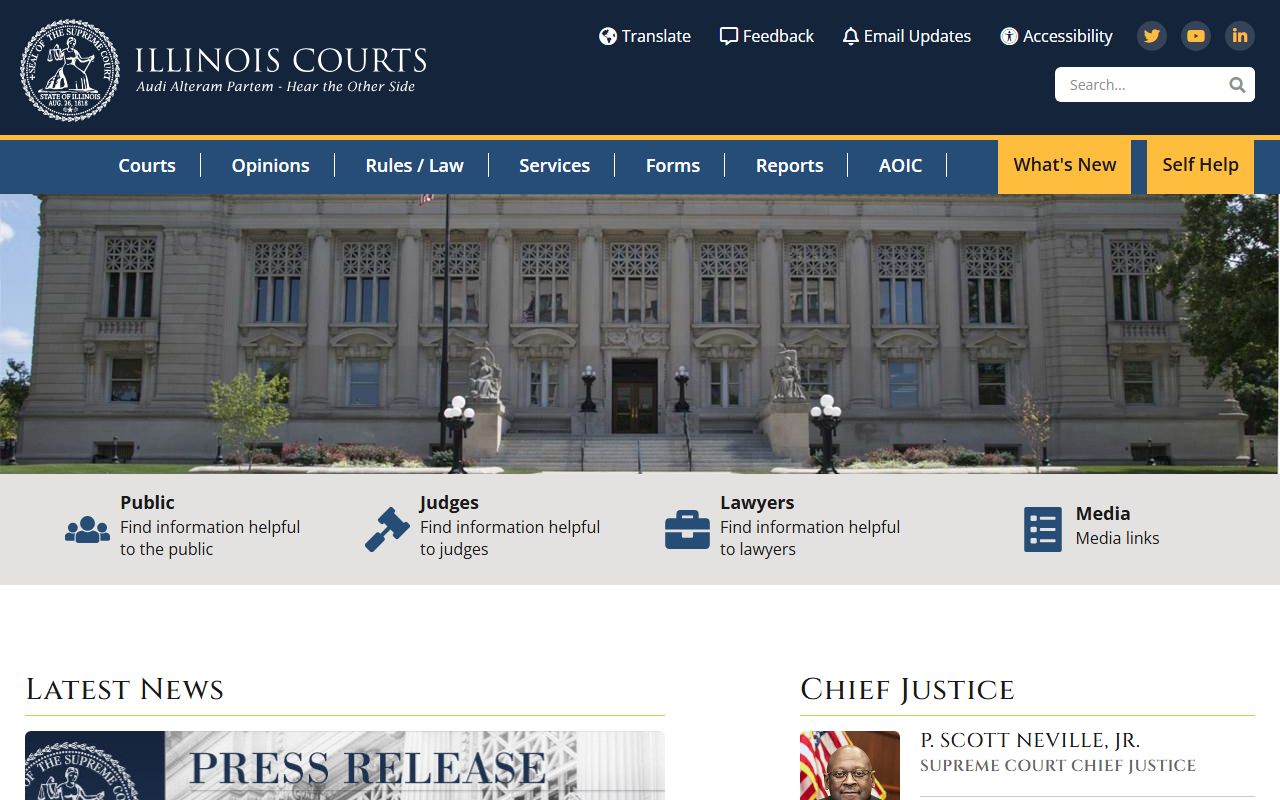
You can use this directory to find the Lawrence County Circuit Court Clerk's contact information and other court resources.
Note: The Lawrence County warrant list may have up to a 24-hour delay in updates, so check with the clerk for the most current status.
Lawrence County Circuit Court Records
Circuit Clerk Cheryl Winkles manages all court records for Lawrence County. The office is at 1100 State Street, Lawrenceville, IL 62439. Phone is (618) 943-2815 and fax is (618) 943-5205. The Lawrence County Circuit Clerk page has information about court services and filings.
The Lawrence County public records page has information about accessing records. You can also check the county calendar for court dates. Under 725 ILCS 5/107-9, arrest warrants in Illinois must state the name, sex, date of birth, and charge. A Lawrence County warrant can be served by any peace officer in the state. Fines can be paid through the clerk's office during business hours.
State Resources for Lawrence County Warrants
The Illinois State Police Bureau of Identification runs CHIRP for criminal history checks. Costs are $16 for paper or $10 for electronic results. The IDOC fugitives list shows parole and probation violators. Call the tip line at (877) 795-4519 to report information. The IDOC Offender Search is free and shows if someone is in state custody.
Under 725 ILCS 5/108-3, search warrants need a complaint under oath. Per 725 ILCS 5/108-6, search warrants expire after 96 hours. Arrest warrants and bench warrants in Lawrence County do not expire. They stay active until a judge recalls them or the person is arrested. The Illinois State Appellate Defender's Office has information on clearing eligible records.
Warrant Types in Lawrence County
Lawrence County courts issue bench warrants, arrest warrants, and search warrants. Bench warrants are the most common. A judge issues one when a person does not show up for court. It gives any peace officer in Illinois the right to arrest them.
Arrest warrants come from criminal complaints filed with the court. If a judge finds probable cause, they sign the warrant. Search warrants let officers search a location for evidence and must be served within 96 hours. Arrest warrants and bench warrants in Lawrence County have no time limit. They stay active until the court clears them. Many of the warrants on the Lawrence County online list are bench warrants from missed court appearances.
Note: Lawrence County is one of only a few small Illinois counties that posts a searchable active warrant list online.
Nearby Counties
These counties border Lawrence County. If you need to search for warrants in a neighboring area, use that county's court system.